


This week in The Legibility Letter
● The coffee grower who never existed: 1958, Colombia invented Juan Valdez so it could stop selling plain coffee — today people ask for “Colombian coffee” as a category of its own (the one thing a competitor can’t copy tomorrow is where yours comes from)
● From the inside: some things are won by pushing and others only by keeping the rhythm — an easy day isn’t a wasted day, it’s the day that protects all the others
● A quote we like: Gracián wrote it in 1647 — the wise do at once what the fool does at last (putting things off is never neutral; every month between “I know” and “I’m doing it” costs you something)
The coffee grower who never existed
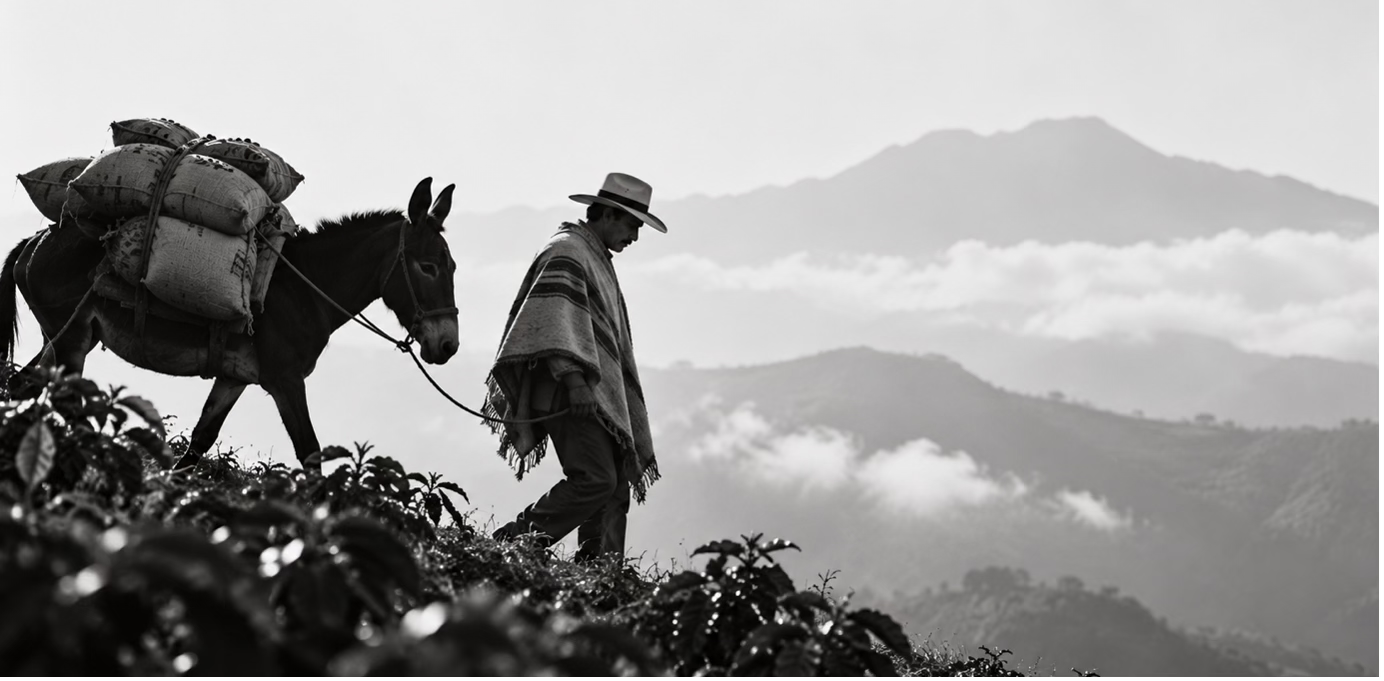
A man in a hat, poncho and moustache walks down a slope in the Andes with a mule loaded with sacks of coffee. The mule is called Conchita. The man is called Juan Valdez.
He never existed. The first actor to play him, for ten years, was Cuban. The coffee, on the other hand, was real.
Just coffee
In the 1950s, coffee was a commodity. At the supermarket you bought coffee, nothing more, and it was nearly always a blend of beans from several countries. Nobody asked for coffee from a particular country, just as nobody asks for sugar from a particular country.
For Colombia, that was a problem. Its growers produced a coffee they considered better, picked by hand on mountainsides, but in the tin it ended up mixed with everything else and sold at the same price.
In 1958, Colombia’s National Federation of Coffee Growers commissioned a campaign for the United States from the agency Doyle Dane Bernbach. The result was Juan Valdez, a grower who picked coffee by hand and brought it down the mountain by mule. The advert was selling an origin: coffee grown only in Colombia.
It worked for decades. Today there are cafés bearing his name in several countries, and people ask for “Colombian coffee” as if it were a category of its own.
If you sell the same as everyone else, the only thing nobody can copy is where what you do comes from.
Where yours comes from
Many small businesses are where Colombian coffee was before Juan Valdez. An accountancy firm, a gym, an agency: from the outside they all look the same, and the client ends up choosing on price.
But each of them comes from somewhere the others don’t. The bakery using the sourdough starter the owner’s mother began forty years ago. The physio who used to play rugby and knows how athletes get injured. The consultancy that only works with restaurants because its owners used to run one.
That’s the one thing about your business a competitor can’t copy tomorrow.
The trap
The temptation is to settle for something nice and general. “Twenty years’ experience” or “passion for what we do” could be said by anyone, and the client reads it without seeing it.
An origin only works if it’s concrete. “We ran a restaurant for ten years” is something only you can say.
Write down in one sentence where your business comes from, with a concrete detail no competitor could say about themselves. If what you come up with could be on anyone’s website, keep looking. Once you have it, put it on your website and in the next quote you send this week.
If the client doesn’t know where you come from, the only thing they can compare is your price.
Cadence
The other day I was talking to my BJJ coach, Hélio, and he told me something that at first sounded like a minor detail. Sometimes he has a student who isn’t feeling great, who’s carrying a small injury or is simply having a bad day. He tells them to come anyway. Do a gentle warm-up and drill some technique without intensity. No hard sparring. Just be there.
What Hélio was describing was how much cadence matters.
That easy session won’t make the student much better that day. That’s not the point. The point is that the rhythm doesn’t break. That the week keeps its shape. That body and mind keep understanding this is part of who you are, not something you do when you feel good.
I think we confuse two kinds of results. Some come from pushing very hard for a short period: a launch, a deadline, a sprint to finish a project. You put all your energy in, get the result and rest.
But other things are only achieved by keeping the cadence. Mastery in a martial art. An audience that trusts you. Your health. A deep relationship. None of them responds well to intensity; they respond to consistency. And here intensity can even be a problem, because bursts of effort tend to be followed by slumps, and every slump breaks the rhythm.
When something depends on cadence, an easy day isn’t a wasted day. It’s the day that protects all the others. What really sets you back is the day you don’t show up, because that day makes the next one easier to skip, and the one after that.
The practical thing is to find the rhythm that produces the result you want, and then protect that rhythm above almost everything else. There are good days and bad days, but the cadence carries on.
Some things are won by pushing. Others are only won by not breaking the rhythm.
“The wise do at once what the fool does at last.”
—Baltasar Gracián
In 1647 Gracián wrote a manual for surviving at court. Almost four centuries later, it reads like a manual for surviving in business.
This aphorism isn’t about getting it right or wrong. It’s about when.
The wise person and the fool end up doing the same thing. What changes is what it costs them to get there.
Think of that client who no longer fits. One person sees it early and ends the relationship with a calm conversation, while they can still choose how. The other drags it out for another year. And during that year, the client eats up hours they don’t pay for, wears the team down and takes the place someone better could have had. By the time they finally leave, it’s no longer a decision. It’s a break-up.
It’s the same with the price rise that comes when the margin can’t take any more, or the conversation with your business partner that happens when there’s no trust left to protect.
There are important decisions I’ve made, in business and in my personal life, that I really knew long before I made them. I wasn’t short of information. I was short of willingness to pay what deciding would cost. And while I waited, that cost kept rising, even though at the time I couldn’t see it.
Putting things off is never neutral. Every month between “I know” and “I’m doing it” costs you something: energy, credibility, opportunities that close.
The wise person and the fool end up in the same place. One just gets there on time. The other gets there with the bill already paid.